Can saffron really be grown at home?
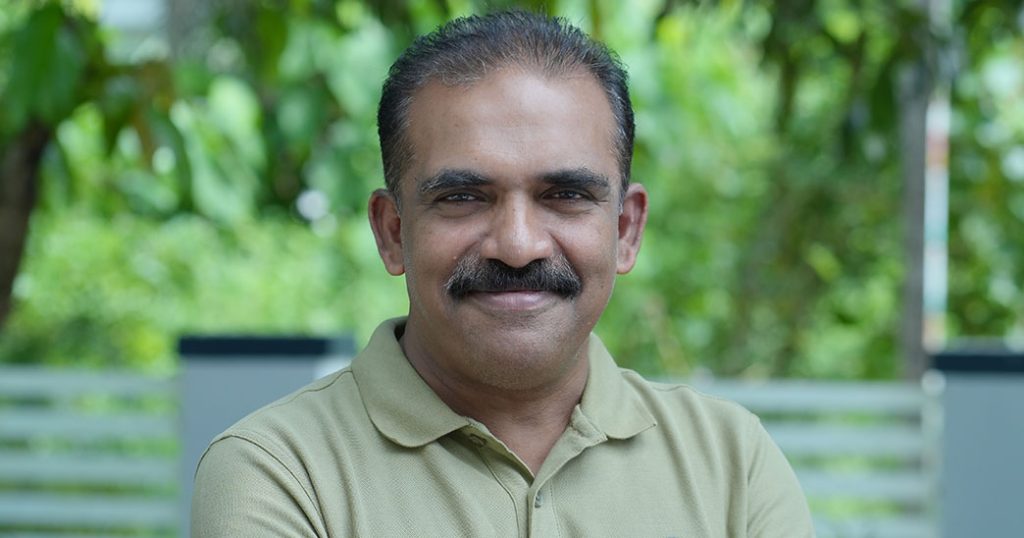
For many, it sounds impossible. But for James Kappani, a resident of Puthur in Kerala’s Thrissur district, it became a mission. Challenging the common belief that saffron can only be cultivated in the famous Pampore region of Kashmir, James successfully created a controlled environment in Kerala’s warm and humid climate and produced one of the world’s most valuable spices right on his rooftop.
Today, saffron worth lakhs of rupees blooms inside a high-tech cultivation facility spread across just 150 square feet on the terrace of his home. His achievement is not merely an agricultural success story—it is a story of vision, determination, knowledge, patience, and unwavering family support.
A Childhood Rooted in Agriculture
James grew up in a family closely connected to farming. As a child, he spent time helping with agricultural activities at home and developed a deep appreciation for the land. Although education and career opportunities eventually took him away from farming, his passion for cultivation never faded. 
In search of employment, he moved to Mumbai and worked in various private companies before beginning a long career abroad. He later served in the air-conditioning division of the defense sector in Saudi Arabia. Years of expatriate life provided him with financial stability as well as valuable technical expertise.
Returning Home with a Different Dream
After retirement, James returned to Kerala with a clear goal.
“I wanted to take up farming again—but not conventional farming,” he says.
He began searching for a high-value crop that could be cultivated in a limited space while offering strong market demand and export potential. That search eventually led him to saffron.
Research, Travel, and Experimentation
Determined to understand every aspect of saffron cultivation, James spent years studying the crop. He visited traditional saffron farms in Kashmir, explored research centers in Pampore, and examined high-tech saffron cultivation projects in different parts of India. He also attended agricultural exhibitions, workshops, and seminars to expand his knowledge.
These experiences convinced him that saffron cultivation in Kerala was possible—provided the right environmental conditions could be created artificially.
The Strength Behind the Success: Family Support
James credits much of his success to the unwavering support of his family.
They stood by him not only financially but also emotionally through every stage of experimentation and uncertainty. While many questioned whether the project would succeed, his family continued to encourage him.
The investment required for advanced cultivation systems and the risks associated with a completely new venture were significant. Yet his family remained committed to the dream.
“Without their support, this would have remained just an idea,” James says.
Creating Kashmir on a Kerala Terrace
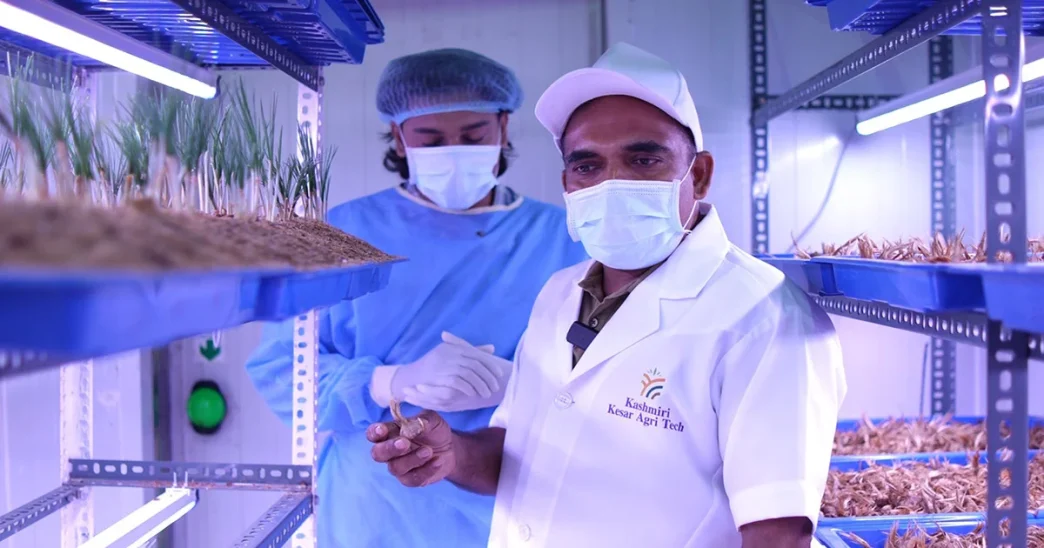
On the terrace of his house, James built a sophisticated cultivation chamber using insulated puff panels. The 150-square-foot facility is equipped with automation systems that precisely regulate temperature and humidity levels required for saffron cultivation.
His professional experience in air-conditioning technology played a crucial role in designing the system.
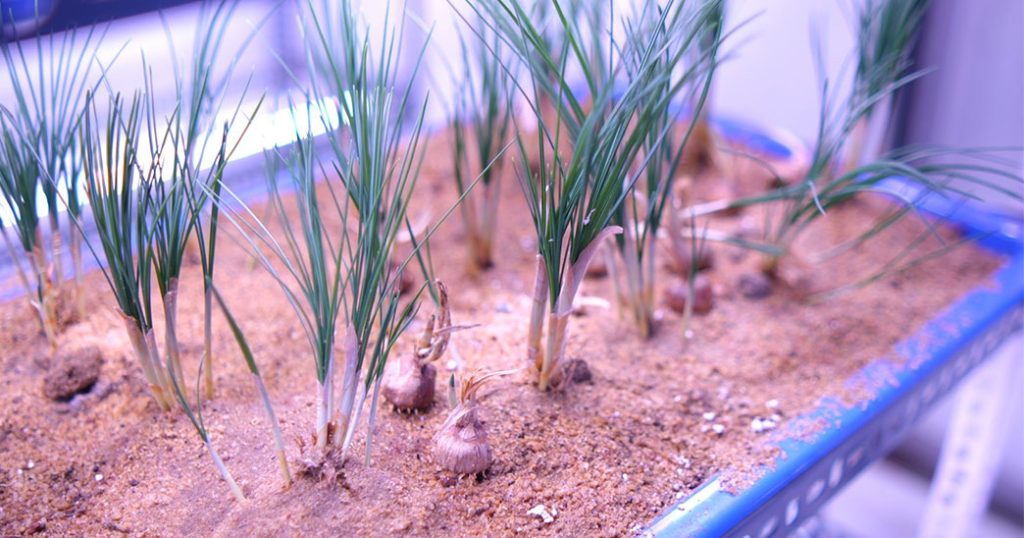
Saffron requires different environmental conditions at different stages of growth, including flowering, active growth, and dormancy. Maintaining these conditions accurately is essential for achieving a successful harvest.
High Yield from a Small Space
James has demonstrated that the yield typically expected from large conventional farming areas can be achieved within a relatively small space using modern cultivation techniques.
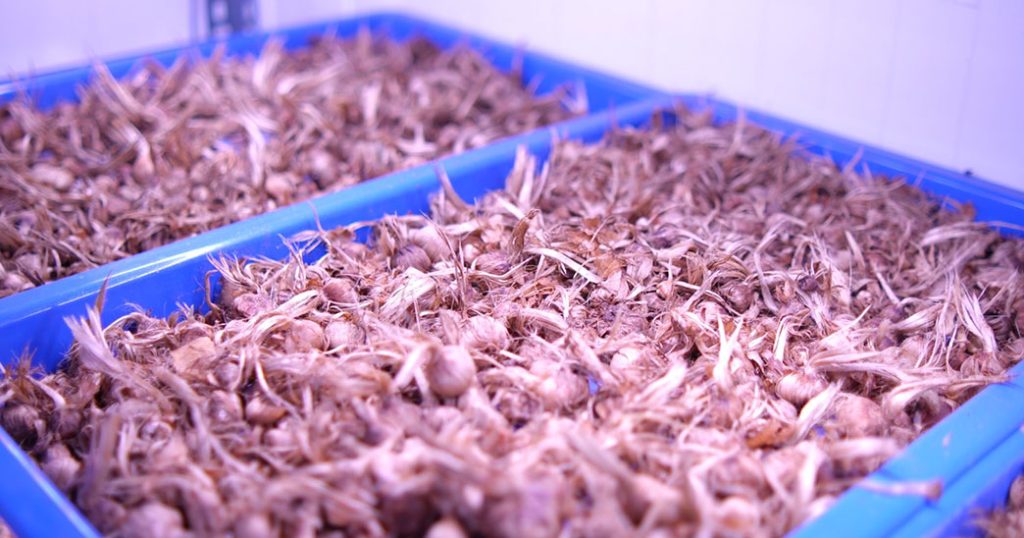
During trial cultivation, 10 kilograms of saffron corms produced approximately 12 grams of saffron. In a 150-square-foot facility, he estimates that each production cycle can potentially yield up to half a kilogram of saffron.
Additional income can also be generated through the sale of saffron corms, which command strong demand in the market. Premium-quality corms can fetch prices of up to ₹3,500 per kilogram.
The Gold Hidden Inside a Flower
Saffron is produced from the dried stigma and style of the saffron flower. It is one of the most labour-intensive crops in the world. Nearly 100,000 flowers are required to produce just one kilogram of saffron, making it a crop that demands exceptional care, precision, and patience.
Pioneering the Future of Saffron Farming in Kerala
James Kappani is widely recognized as one of the pioneers who successfully cultivated and marketed saffron in Kerala using controlled-environment agriculture.
Today, he shares his knowledge through training programs, workshops, and awareness sessions, helping others explore the possibilities of high-value farming.
“Success in agriculture does not happen overnight. It requires patience, continuous learning, proper planning, and strong family support,” says James.
His journey proves that innovation, determination, and technology can transform even the most unlikely agricultural dream into reality.