When movement becomes the life of dance, rhythm finds its companion in the Chilanka.
“Chilanka breathes life into dance. Without its sound, dance feels incomplete. By giving life to dance, the chilanka fulfills its purpose.”
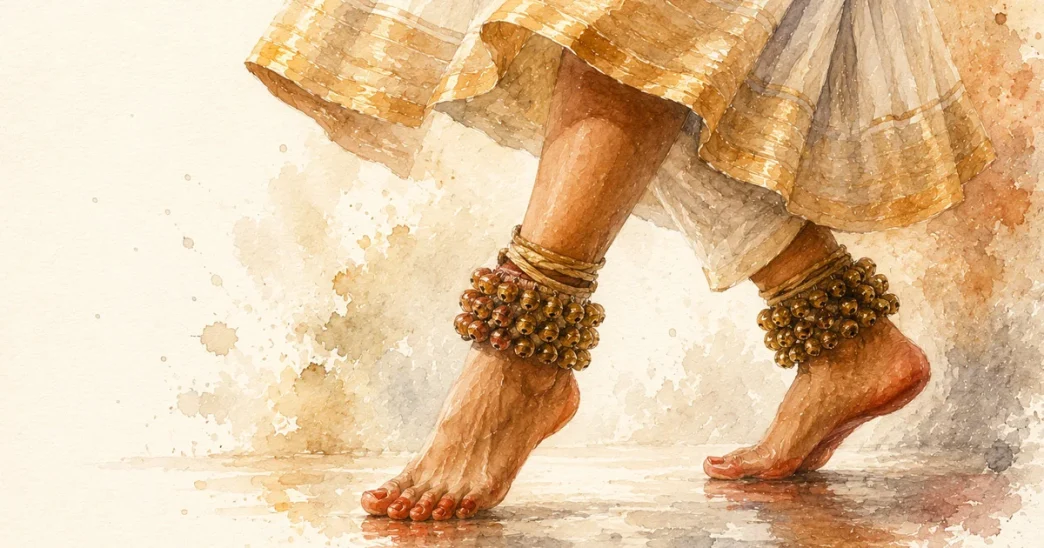
In Indian classical dance traditions, the chilanka (also known as ghungroo) is considered the soul of performance and one of the most important ornaments. In Kerala’s artistic and cultural heritage, it holds a unique and respected place. The melodious sound of these tiny bells, worn around the ankles, transforms dance from a purely visual experience into an auditory delight as well.
In traditional Indian dance forms especially Bharatanatyam, Kathak, Kuchipudi, Mohiniyattam, and Odissi the chilanka is an essential element. 
Historical Significance
The history of the chilanka dates back thousands of years. References to sound instruments used in dance can be found in the ancient Indian treatise Natyashastra. Chilanka gained prominence as part of temple dances and royal court performances.
In the Devadasi tradition and Gurukul training systems, the ceremony of tying the chilanka for the first time carried deep spiritual and cultural meaning. It symbolized a dancer’s formal initiation into the path of dance. Over time, it evolved as a significant part of India’s cultural heritage.
Ancient sculptures and temple carvings depict dancers wearing chilanka, proving its long-standing association with artistic and cultural development. There is also a tradition of associating chilanka with divinity. In many temple dance rituals, prayers are offered before tying the chilanka, elevating dance from a mere art form to a spiritual experience.
Importance of Chilanka in Dance
- Enhances rhythmic awareness
- Helps dancers synchronize their steps precisely with rhythm
- Creates a fusion of sound and visual experience for the audience
- Boosts confidence, motivating dancers through the sound of the bells
- Acts as a training tool to identify mistakes in footwork
- Serves as a cultural symbol of Indian classical dance heritage
Materials Used to Make Chilanka
Bells: Copper, bronze, silver, or alloy metals
Strap / Thread: Cotton thread, leather strap, or velvet fabric
Cord / Base: Strong nylon or traditional thread
The quality of these materials determines the clarity and durability of the sound.
The number of bells varies depending on the dance style and the dancer’s experience level:
- Beginners: 50 to 100 bells
- Intermediate dancers: 100 to 150 bells
- Professional dancers: 150 to 250 or more bells
As the number of bells increases, the intensity and clarity of sound also increase. The precision of the dancer’s footwork and rhythmic control become more evident. If a step goes wrong or rhythm falters, the chilanka clearly reveals it.
The bells are typically silver or copper in color, while the threads and fabrics used for tying come in different shades:
- Red – Symbol of energy and enthusiasm
- Black – Stability and seriousness
- White – Purity and peace
- Gold – Grandeur and divinity
Colors are often chosen to complement the dancer’s costume.
Types of Chilanka
- Bharatanatyam Chilanka – Thick bells with a strong, powerful sound
- Kathak Chilanka – More bells with a softer tonal quality
- Mohiniyattam Chilanka – Simple design with a gentle sound
- Kuchipudi Chilanka – Medium-intensity sound
- Odissi Chilanka – Designed to create melodic harmony in sound
Each dance style has its own rhythm and movement vocabulary, which results in variations in the design and sound of the chilanka.